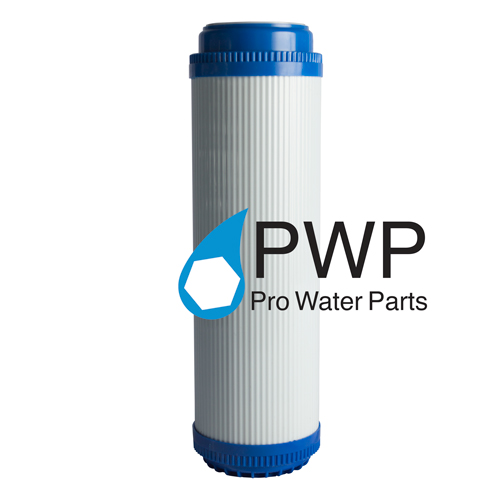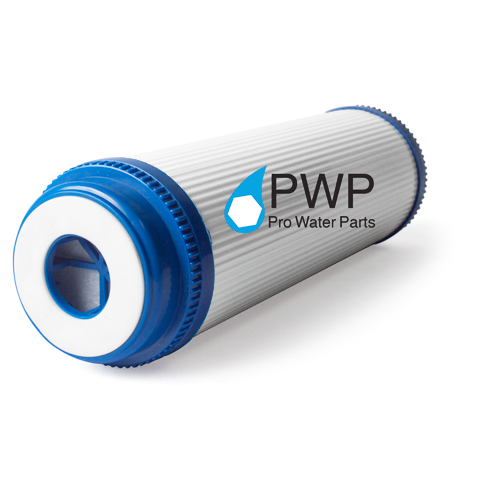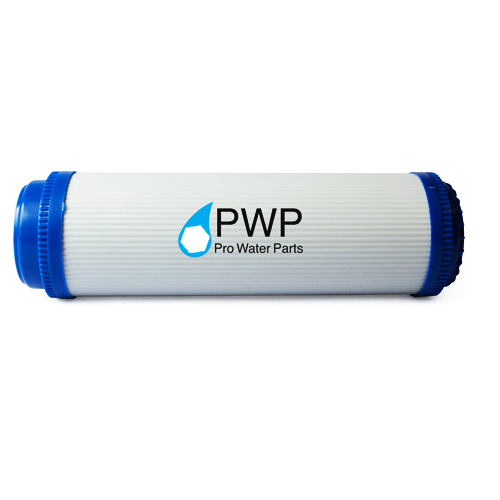
Carbon filtering is a method of filtering that uses a bed of activated carbon to remove contaminants and impurities, using chemical adsorption.
Each particle, or granule, of carbon provides a large surface area, or pore structure, allowing contaminants the maximum possible exposure to the active sites within the filter media. One gram of activated carbon has a surface area in excess of 3,000 m2 (32,000 sq ft).
Activated carbon works via a process called adsorption, whereby pollutant molecules in the fluid to be treated are trapped inside the pore structure of the carbon substrate. Carbon filtering is commonly used for water purification; active charcoal carbon filters are most effective at removing chlorine, particles such as sediment, volatile organic compounds (VOCs), taste and odor from water. They are not effective at removing minerals, salts, and dissolved inorganic substances.
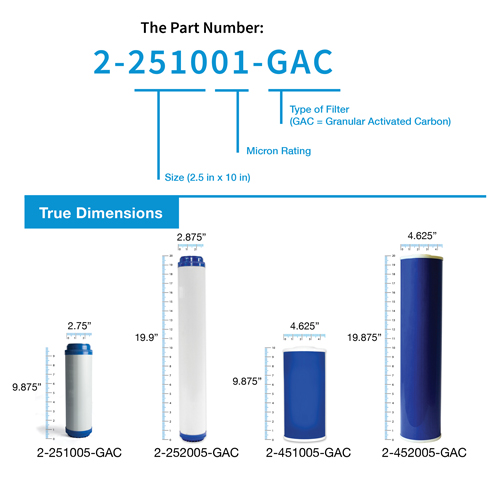
Typical particle sizes that can be removed by carbon filters range from 0.5 to 50 micrometres. The particle size will be used as part of the filter description. The efficacy of a carbon filter is also based upon the flow rate regulation. When the water is allowed to flow through the filter at a slower rate, the contaminants are exposed to the filter media for a longer amount of time.



effectively improves taste and efficiently reduces odor as well as chlorine
designed for optimal absorption
post-filter to reduce carbon fines
removes volatile compounds for better drinking water
uses NSF certified materials
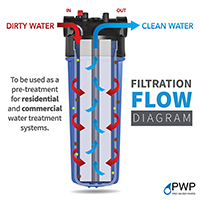
whole-house filtration
point of use (POU) RO systems
commercial RO pretreatment
high-flow applications
chlorine removal
color removal
odor removal
raw material:
coconut activated carbon
filtration precision:
1, 5, 10, 20, and 50 micron
dimensions:
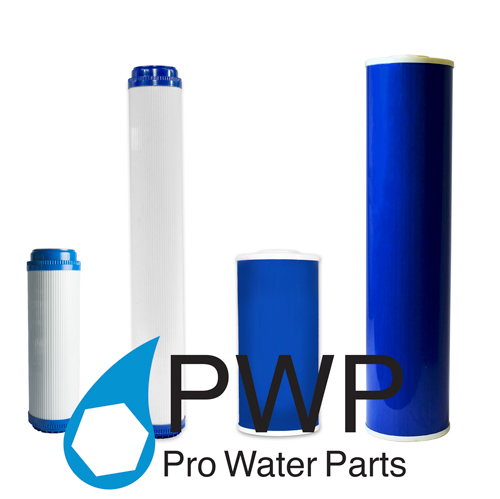
standard 2.5in x 10in and 20in
jumbo 4.5in x 10in and 20in
3.19gpm |
3.24gpm |
3.32gpm |
3.38gpm |
3.46gpm |
|
6.39gpm |
6.49gpm |
6.65gpm |
6.76gpm |
6.92gpm |
|
9.21gpm |
9.27gpm |
9.32gpm |
9.43gpm |
9.48gpm |
|
18.43gpm |
18.54gpm |
18.65gpm |
18.86gpm |
18.96gpm |
pressure drop:
1psi
max operating temperature (ºF):
158 ºF
max feed pressure resistance (psi):
100psi
max pressure drop resistance (psi):
58psi
absorption for carbon tetra-chloride (%):
greater than 80
absorption for methylene blue (ml/g):
13-16
ash content (%):
less than 3.5
About | Contact Us | Resources
Phone: 770.420.6447 | Toll Free: 877.658.9009 | sales@prowaterparts.com | Terms & Conditions
Copyright © 2019 ProWaterParts.com